


iAR Travel Assistant

Category:
UI/UX Design
Client:
Virginia Tech
The Challenge
The core challenge in designing iAR glasses for traveling abroad is providing meaningful assistance without intruding on the travel experience. Users must feel comfortable and immersed in unfamiliar environments while still receiving support for navigation, language translation, and social cues when needed. Achieving this balance requires an adaptive, context-aware system that offers help seamlessly and on the user’s terms, ensuring guidance is available without becoming distracting or overwhelming.
The Solution
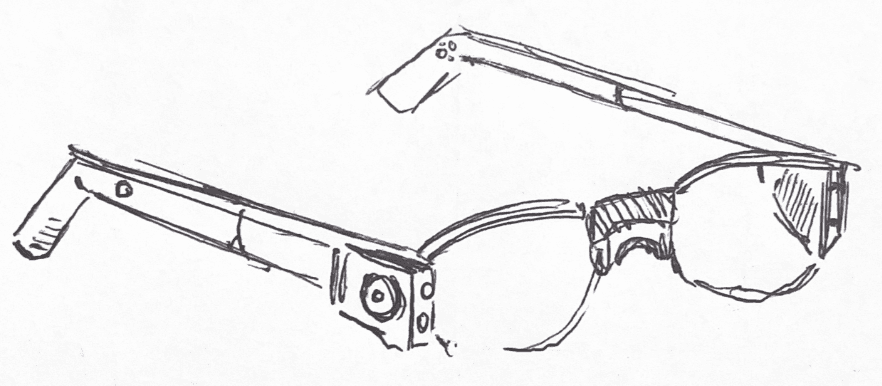
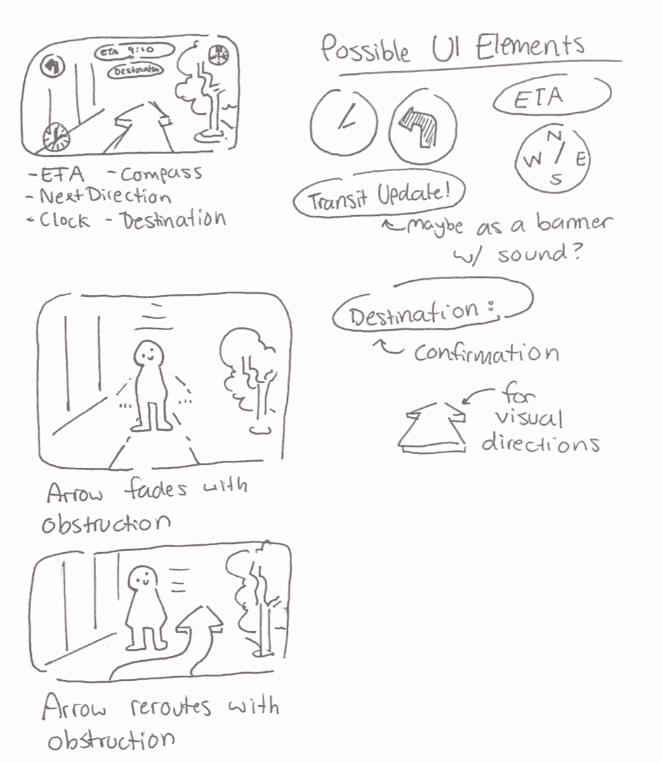
We utilized the HCI lifecycle to systematically refine our solution, narrowing the scope to two core challenges: travel navigation and text-based translation. With hardware feasibility constraints set aside, we focused primarily on UI design and user workflow, progressing through interviews, storyboarding, wireframing, prototyping, and empirical and analytical evaluation. This process led to a three-stage travel solution combining a lightweight HUD with in-place visual overlays supported by voice assistance. For translation, we implemented a contextual fill-and-replace approach that overlays foreign text with translated content, preserving meaning while minimizing visual disruption. Central to the effectiveness of our design is a context-aware AI that dynamically adjusts the system’s behavior—such as muting voice guidance during conversations while keeping visual cues visible, or triggering translations only after prolonged user gaze. By closely mirroring original text style and placement, the solution delivers assistance that feels natural, intuitive, and minimally intrusive.
The Result
A flexible yet well-grounded set of design principles, supported by proposed solutions, for building iAR glasses that effectively assist users while traveling abroad.